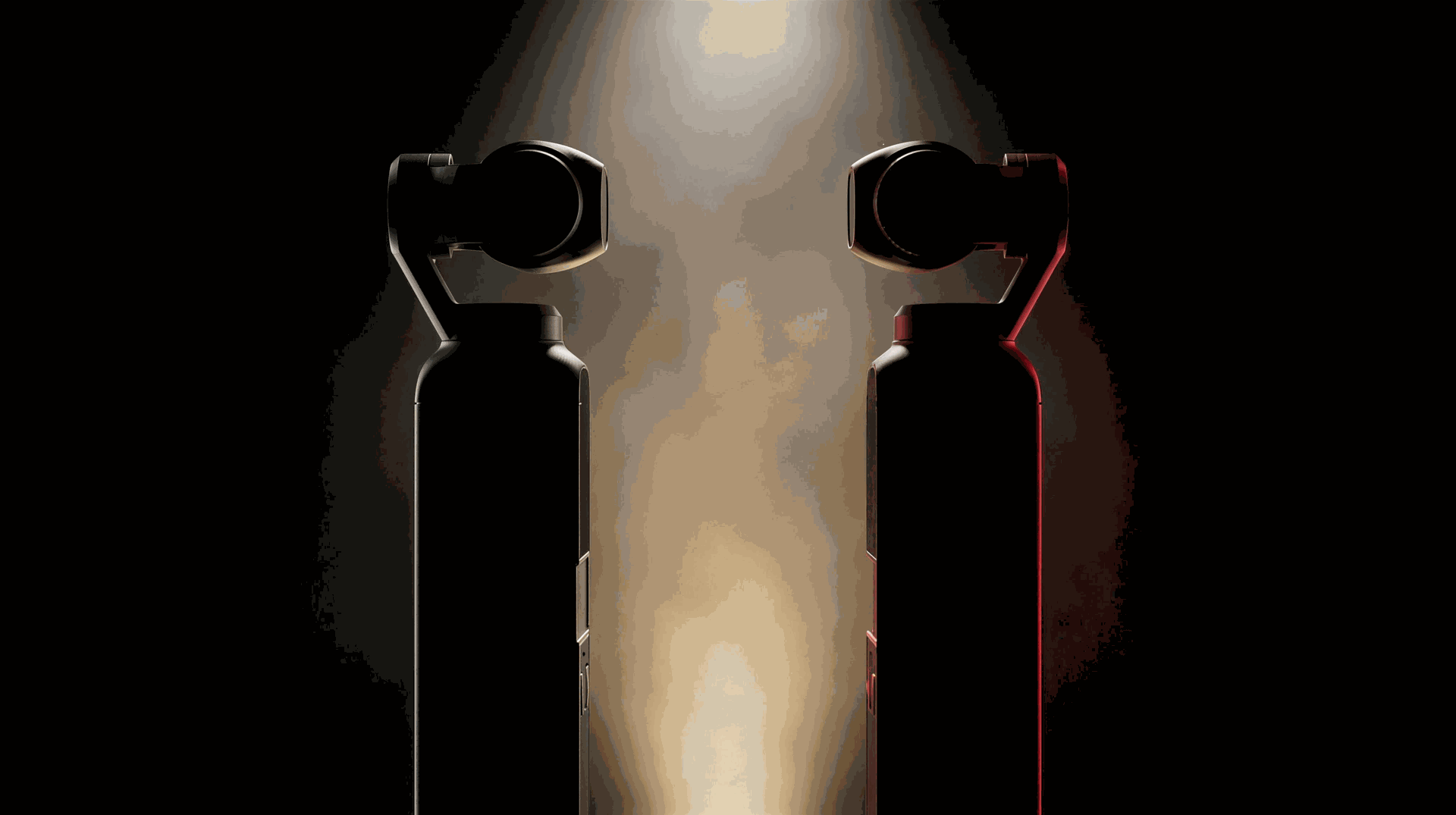
Two cameras small enough to forget you're carrying them, both shooting 4K so smooth you'd swear it came off a much bigger rig. The Pocket 4 is DJI's new flagship. The Pocket 3 is the much-loved champ it's trying to dethrone. So which one deserves your money? We put them in the ring.
Pocket Cinema · Head to Head
Two tiny gimbal cameras that fit in a pocket and shoot cinema-grade 4K. One wins on paper. The other wins on price. Here's the straight fight.
Pick your Pocket
You shoot a lot at night or indoors
Pocket 4
You love buttery slow-motion
Pocket 4
You film long takes & lots of 4K
Pocket 4
It's mostly daily vlogging
Pocket 3
You want the best value
Pocket 3
The verdict: Pocket 4 takes more rounds — better low light, longer recording, faster slow-motion and the newest tracking. But the Pocket 3 is still a brilliant daily vlogging camera and the smarter buy if budget matters. It's an evolution, not a revolution — and both are in stock at SkyOrbits in Muscat.
SkyOrbits · Official DJI products · Muscat showroom · Fast delivery · Installments available
What actually changed
Same 1-inch sensor class — DJI didn't blow it up and start over. Instead they sharpened the parts you feel every day: cleaner low light, faster slow-motion, storage built right into the camera, and smarter subject tracking. It's an evolution, not a reinvention — which is exactly why the Pocket 3 is still such a smart buy.
Round by round
Low light — Pocket 4. This is the upgrade you'll notice first. Indoors, at golden hour, after sunset — the Pocket 4 holds onto detail and keeps noise down where the Pocket 3 starts to grain up. If you shoot a lot in the evening, this round alone might decide it.
Storage — Pocket 4. It has 107 GB built in. You can pull it out of the box and start filming 4K without buying a card first. The Pocket 3 records to microSD only — great cards, but one more thing to buy and remember.
Slow-motion — Pocket 4. Both shoot gorgeous slow-mo, but the Pocket 4 pushes to 4K/240fps versus 4K/120fps on the Pocket 3. Twice the frames means twice the drama when you slow a moment down.
Tracking — Pocket 4. ActiveTrack 7.0 locks onto your face and holds it better, even when you move around or the light shifts. Walk-and-talk vlogs stay centred without you babysitting the frame.
Audio — Pocket 4. Built-in 4-channel OsmoAudio and a cleaner link to the DJI Mic 3 system. For talking-to-camera and interviews, that's a real head start before you add anything.
Value — Pocket 3. Here's the twist: the Pocket 3 is the better-value pick. It does the daily-vlogging job brilliantly for less money. Not everyone needs the newest tracking and 240fps — and if that's you, the Pocket 3 still punches well above its price.
So… which one is for you?
Get the Pocket 4 if you shoot a lot at night or indoors, you love buttery slow-motion, you film long 4K takes, or you just want the newest and best.
Get the Pocket 3 if it's mostly daily vlogging in good light, or you want the smartest spend — a brilliant pocket camera without paying for the flagship.
The verdict
The Pocket 4 takes more rounds — better low light, longer recording, faster slow-motion and the newest tracking. But the Pocket 3 is still a knockout for everyday creators and the smarter buy if budget matters. There's no wrong answer here; there's only the one that fits your shooting.
Both are in stock at SkyOrbits in Muscat — official DJI products, official warranty, fast delivery, and installment plans if you'd rather split it.
See the Pocket 4 →See the Pocket 3 →
Quick questions
Should I upgrade from a Pocket 3 to a Pocket 4?
If your Pocket 3 already does what you need, you don't have to. Upgrade if low-light, on-board storage, or 240fps slow-mo genuinely matter to your work.
Which is better for vlogging?
Both are excellent. The Pocket 4 edges ahead in low light and tracking; the Pocket 3 gives you most of the experience for less.
Do I need a memory card?
The Pocket 4 has 107 GB built in, so not to start — add a fast microSD for long 4K shoots. The Pocket 3 needs a microSD from day one (we stock them).